In the early 1850s, just as then-Brunswick resident Harriet Beecher Stowe was penning her famous Uncle Tom’s Cabin, a cohort of young pine seedlings emerged from the sandy plain just east of downtown, along the Bath Road. In the intervening 170 years many of those pines developed into a grove of trees, now averaging 30” in diameter and 120’-tall, known throughout the region as the Bowdoin Pines. While supportive climate, fertile soils, and modest tending assured the survival and sustained vigor for many, by the early 2000s some of them threatened nearby powerlines and the Bath Road, leading some to be felled; elsewhere non-native shrubs and trees invaded the understory and threaten the Pines longevity. Bowdoin College administrators recognized the change and sought to devise a plan to ensure an enduring visual, ecologic, and cultural legacy of its great pines.
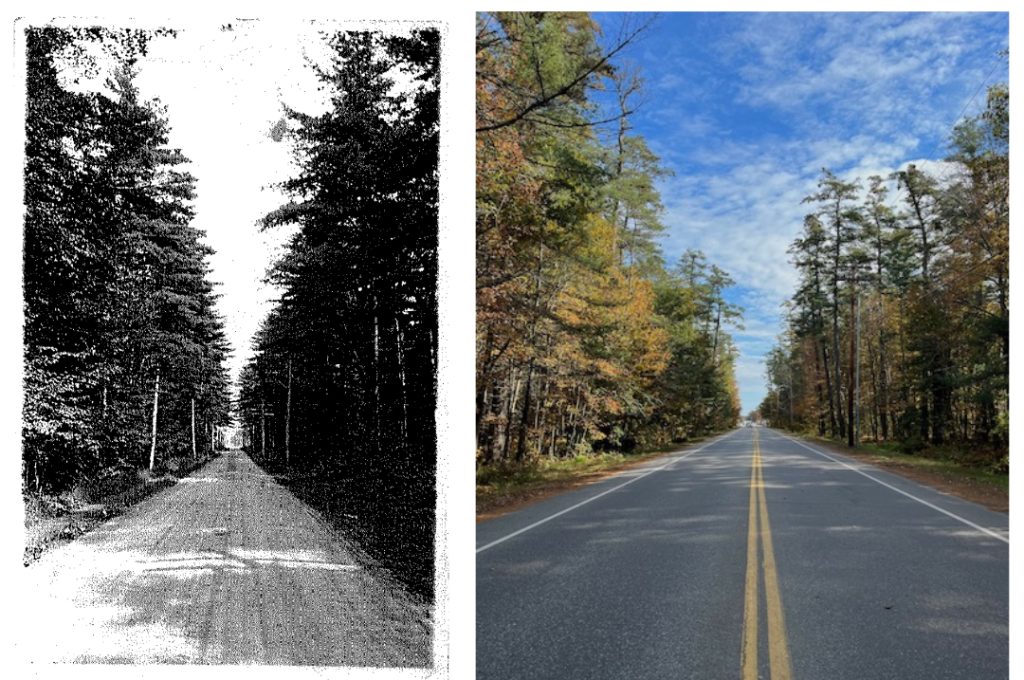
Together with a core group of mostly Bowdoin faculty, staff, and students, we tackled a complex task, not only from a silvicultural and economic standpoint, but from the potentially more challenging effort necessary to incorporate desires of the college and Brunswick communities into the plan. Managing the pines would require their buy-in before any felling, tending, and replanting could occur, as most such are disruptive and often perceived as unattractive, unnatural, and potentially harmful. Thus, we embarked on an effort to find common ground and hopefully ensure that the Bowdoin Pines remained the Bowdoin Pines and not the Bowdoin Oaks and Red Maples.
With the help of the College’s Communications, Facilities, and Treasurer’s Departments and others, including Maine Woodland Owners staffers, educational materials were distributed, town officials were consulted, public tours were held, all in an effort to describe a plan that was years in the making. Those conversations ultimately centered around four distinct proposals:
- Leave as is.
- Apply a text-book silvicultural model over 24 acres.
- Apply a forest health model over 24 acres.
- Apply a forest health model over 17 acres, with seven acres reserved.
The group opted to implement the latter. The selected reserve is where professors often utilize for ecology studies; they wanted the side by side treatment and set-aside areas. We defined forest health as a selective harvesting program that would target many of the non-pine species, including woolly adelgid-infected hemlocks, non-native Norway spruce, small diameter red maple and red oak, along with some large pines that were unstable or competing with other, potentially healthier, pines. To minimize the area necessary to yard wood, and avoid disturbing the many walking trails throughout the area, they opted to secure the services of a logger with a cut-to-length processor and forwarder. For me, the obvious choice was Tyler Reynolds of China.
In early June, Tyler began, and within four weeks had removed a total of 50 MBF of pine logs, 10 MBF of hemlock and spruce logs, 40 cords of hardwood pulp/firewood, and 200 tons of softwood fuelwood. He removed 31% of the pre-harvest volume, 55% of the red maple, 58% of the hemlock, and 16% of the white pine. Though the harvest didn’t quite breakeven financially, largely because of administrative delays and Bowdoin’s donation of firewood to the local wood bank, the College made Reynolds right.
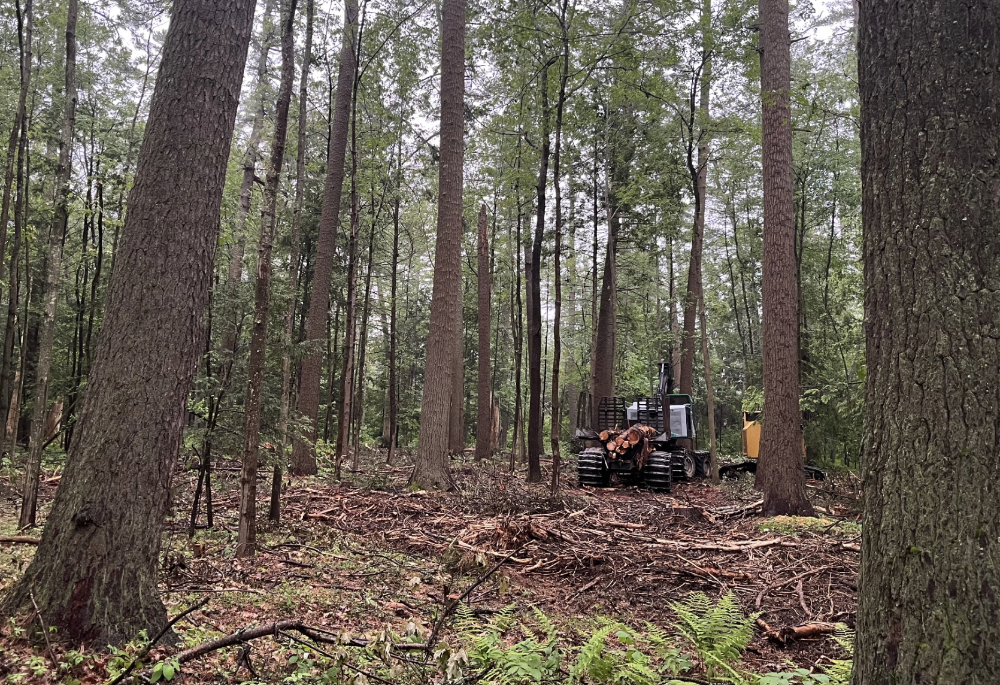
Clearing the ground for young pines to become established is only part of our task; we need seedlings to develop and thrive. By way of example, we only need to look at forest succession following the 1960s’ harvest, when many pines developed, but were ultimately shaded-out by what are now the 10″ to 12” diameter red maples and oaks. Followup treatments, to eliminate that competition, never occurred. We did not want to walk that path again. Fortuitously, the huge 2023 pine cone crop resulted in a carpet of 2”-tall pine seedlings. Our timing seemed perfect. Though logging equipment trampled many of them, many more appear to have desiccated. Many of us know that pine seed thrives best when in contact with mineral soil, and many of Bowdoin’s seeds illustrated that same reality; though successfully germinated the seed’s stored energy was insufficient to extend that young root through the thick leaf and litter sufficiently to the moisture, energy and nutrients stored in the deeper mineral soil.
However, this time we won’t count on Mother Nature entirely and will supplement those seedlings that did reach mineral soil, with transplanted nursery-raised ones. Later we’ll tend to the hardwood competition. But other competition remains. Non-native and invasive knotweed, bittersweet, Norway maple, and honeysuckle also will benefit from the increased sunlight that now reaches the harvested site. These pests are relatively confined to a central location, but will now certainly spread. And so begins our next big challenge.